Moz information
DID YOU KNOW?
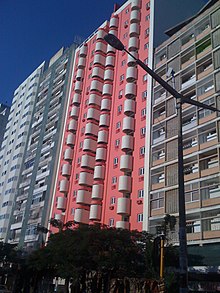
Mozambique Maputo (Portuguese pronunciation): known as Lourenço Marques before independence, is the capital and largest city of Mozambique.
It is known as the City of Acacias, in reference to the acacia trees commonly found along its avenues, and the Pearl of the Indian Ocean.
Today it is a port city, with an economy centered on the port. According to the 2007 census, the population is 1,766,184.
Cotton, sugar, chromite, sisal, copra and hardwood are the main export products. The city manufactures cement, ceramics, furniture, shoes and rubber.
On the north bank of the Espírito Santo estuary, in Delagoa Bay, an inlet of the Indian Ocean, Lourenço Marques is named after the Portuguese navigator who, with António Caldeira, was sent in 1544 by the governor of Mozambique on a voyage of exploration. They explored the lower courses of the rivers that flow into Delagoa Bay, notably Espírito Santo. The forts and trading stations that the Portuguese established, abandoned and reoccupied on the north bank of the river were all called Lourenço Marques. The existing village dates back to around 1850, with the previous settlement having been completely destroyed by the indigenous people. The city developed around a Portuguese fortress completed in 1787.
On December 9, 1876, Lourenço Marques was elevated to the category of town and on November 10, 1887, it became a city. The Portuguese-British conflict over the possession of Lourenço Marques ended on July 24, 1875 with the decision of French President Patrice Mac-Mahon in favor of Portugal.
In 1871 the town was described as a poor place, with narrow streets, reasonably good houses with flat roofs, thatched huts, decaying forts and a rusty cannon, surrounded by a recently erected wall 1.8 meters (6 ft) high. height and protected by bastions at intervals.